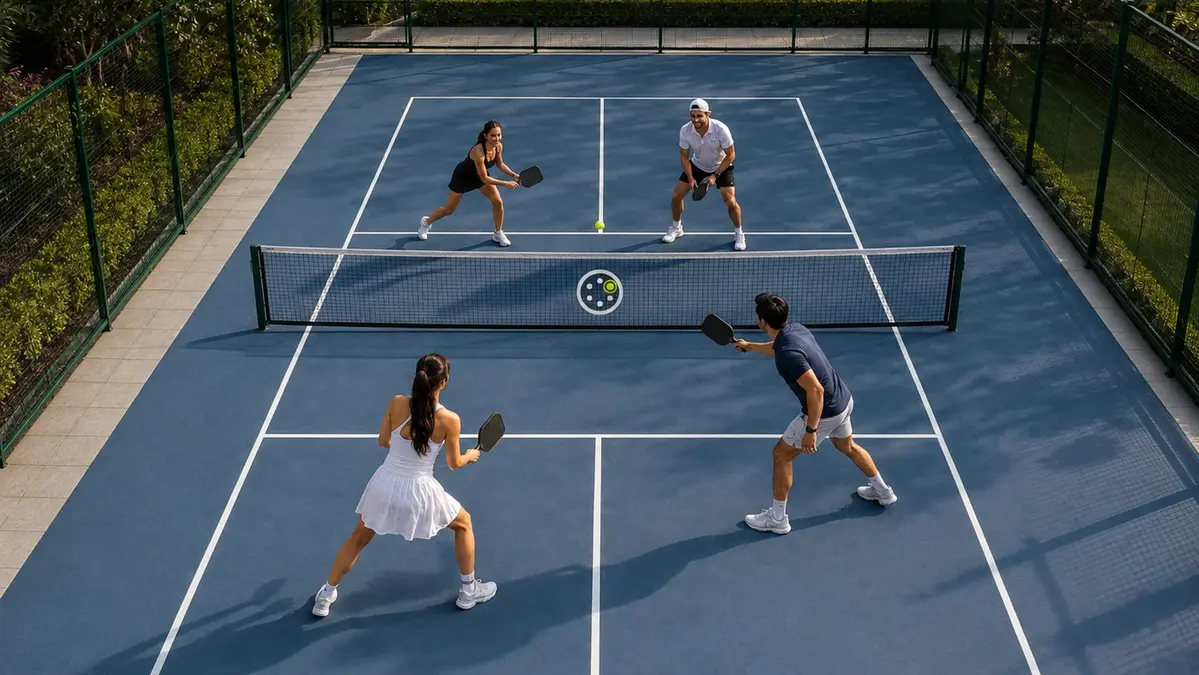
5 Drills to Improve Your Dink Game
Five structured dink and reset drills for better control, patience, footwork and decision-making at the kitchen line.
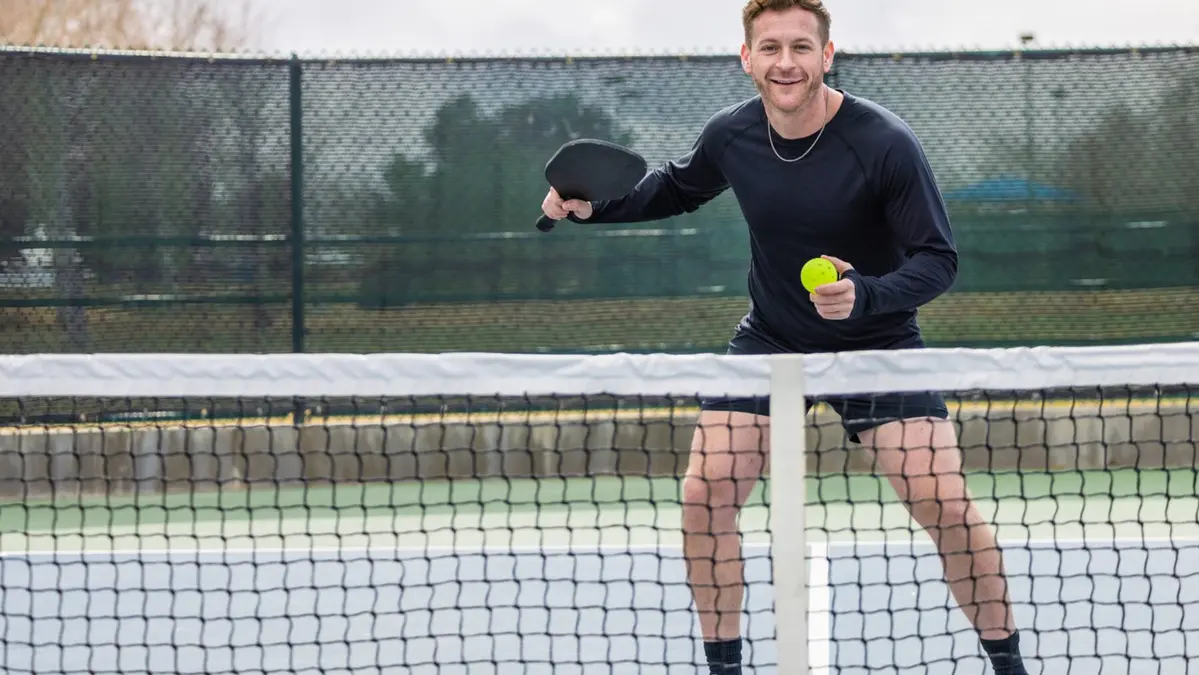
A reliable dink is not simply a soft shot. It is a controlled ball that lands in or near the opponent's kitchen and makes an aggressive volley difficult. Good dinking gives you time, creates angles and can force an opponent to lift the ball high enough for an attack.
The skill improves fastest when practice has a target. Randomly exchanging soft balls may feel productive, but a repeatable drill lets you measure consistency and identify why errors happen. The five drills below progress from basic control to movement and match-like decision-making.
If you need a regular practice venue, browse nearby pickleball courts or check club listings. Players who prefer guided correction can also explore PickleHunter coach profiles.
Before you begin
Use two players, one ball and a clear kitchen line. Begin at a comfortable pace. Keep a neutral grip, hold the paddle in front of your body and use a compact motion from the shoulder. The paddle face should be stable through contact. Bend through the knees rather than dropping the paddle with your wrist.
Count only balls that meet the purpose of the drill. A rally of 30 high, attackable balls is not the same as 30 controlled dinks. Reset the count when the ball goes into the net, lands out or sits high enough for an easy put-away.
Drill 1: Straight-ahead consistency
Stand opposite your partner at the kitchen line and dink straight ahead. Choose half of the court so both players have a clear lane. Your first target is 20 controlled shots without a fault; progress to 30 and then 50.
Aim for enough net clearance to avoid unnecessary errors while keeping the ball low after it crosses. Watch the ball through contact and return to the ready position after every shot. Avoid taking a large backswing. The purpose is to create the same calm motion repeatedly.
Make it harder
- Alternate forehand and backhand dinks.
- Place two flat markers in the kitchen and score one point for each target hit.
- Require every ball to bounce before it is returned.
- Repeat the drill on both the left and right halves of the court.
Drill 2: Cross-court control
Move diagonally opposite your partner and exchange cross-court dinks. The diagonal path is longer, which gives more space, but the angle also pulls players towards the sideline. Practise recovering your balance after each shot rather than drifting off the court.
Set a goal of 25 successful balls, then change diagonals. Notice whether one direction feels less comfortable. Many players can create angle with a forehand but lose control on the backhand side. Spend more time on the weaker pattern instead of only repeating the one that looks good.
Key focus
Move your feet so contact stays in front of your body. Reaching sideways with the arm makes paddle control less reliable. When the ball pulls you wide, use small adjustment steps and recover towards a useful court position after the shot.
Drill 3: The figure-eight movement drill
Two players stand opposite each other. Player A sends every ball cross-court; Player B sends every ball straight. The pattern makes the ball travel in a figure eight and requires both players to shift laterally along the kitchen line.
Begin slowly enough to preserve the pattern. Count a sequence only when both placement and movement remain controlled. After two minutes, reverse the roles so the other player practises the cross-court direction.
This drill connects footwork with shot selection. In a real rally, you rarely receive ten balls in exactly the same place. Learning to arrive balanced is more valuable than trying to rescue every ball with your hand.
Drill 4: Target and pressure dinking
Place safe flat targets near the opponent's kitchen sidelines and middle. Play cooperative dinks for the first four shots. From the fifth ball onward, each player may aim for a target while still keeping the shot unattackable.
Award one point for a target and one point when placement forces the opponent to move but they still return the ball. This keeps the drill competitive without turning every exchange into a reckless winner attempt. Play to seven, then change sides.
What this teaches
- Changing direction without changing the size of the swing.
- Recognising when an angle is available.
- Moving an opponent before attacking.
- Staying patient when the correct shot is neutral.
Drill 5: Transition-zone resets
One player begins at the kitchen line as the feeder. The practising player starts several steps behind the kitchen in the transition zone. The feeder sends controlled balls towards the feet and body. The practising player absorbs the pace and drops the ball softly into the kitchen.
After a successful reset, take one balanced step forward. Continue until reaching the kitchen line. If the ball is hit too high, into the net or out, return to the starting position. Complete five successful journeys, then switch roles.
Do not rush through the transition zone. Split-step as the opponent contacts the ball, stabilise your body and use a quiet paddle. This drill is especially useful after a third-shot drop or whenever opponents keep you away from the kitchen.
A practical 20-minute session
- Three minutes: gentle straight-ahead dinks to establish touch.
- Four minutes: cross-court dinks, two minutes on each diagonal.
- Four minutes: figure-eight movement, switching roles halfway.
- Four minutes: target and pressure points.
- Five minutes: transition-zone resets.
Record one simple number after practice: your best uninterrupted rally, targets hit or successful transition journeys. Measurement keeps the next session purposeful.
Common mistakes to correct
Trying to win every dink
The aim is often to prevent an attack and wait for a better ball. Forcing a sharp angle from a poor position creates avoidable errors.
Using too much wrist
Excess wrist movement changes the paddle face at contact. Use a simple swing and let placement come from preparation, angle and controlled pace.
Standing upright
A lower athletic position makes it easier to contact the ball in front and lift it safely over the net. Bend the knees, keep the chest balanced and avoid leaning into the kitchen.
Watching the result instead of recovering
After contact, bring the paddle back to ready position. Admiring a good shot for even a moment can make the next ball feel unexpectedly fast.
Take the drill into real games
Practice becomes valuable when it changes decisions under pressure. Join suitable Open Play sessions and set one match objective, such as reaching the kitchen under control or refusing to attack a ball below net height. Do not try to repair five habits in one game.
When you want a competitive benchmark, browse upcoming tournaments and choose an event appropriate to your level. Continue with more guides in the PickleHunter Journal.
Consistency first, placement second, attack only when the ball earns it.
Ten focused minutes several times a week can be more useful than one long, unfocused session. Keep the movement small, the paddle quiet and the target clear. A dependable dink is built one controlled ball at a time.