What is Pickleball? A Beginner's Guide for India
A practical introduction to pickleball in India: court setup, equipment, essential rules, scoring, etiquette and how to find your first game.
Pickleball is a paddle sport that combines quick reactions, patient placement and a strong social side. It borrows familiar ideas from tennis, badminton and table tennis, but it has its own court, equipment and rules. A new player can understand the basic flow in one session, while the tactical depth can keep an experienced player learning for years.
That balance is a big part of its appeal in India. Friends can begin casually, families can share a court, and competitive players can progress towards organised matches. You do not need to arrive with a complete team either. PickleHunter helps you discover nearby courts, check pickleball clubs, join organised Open Play sessions and browse upcoming pickleball tournaments.
What does a pickleball game look like?
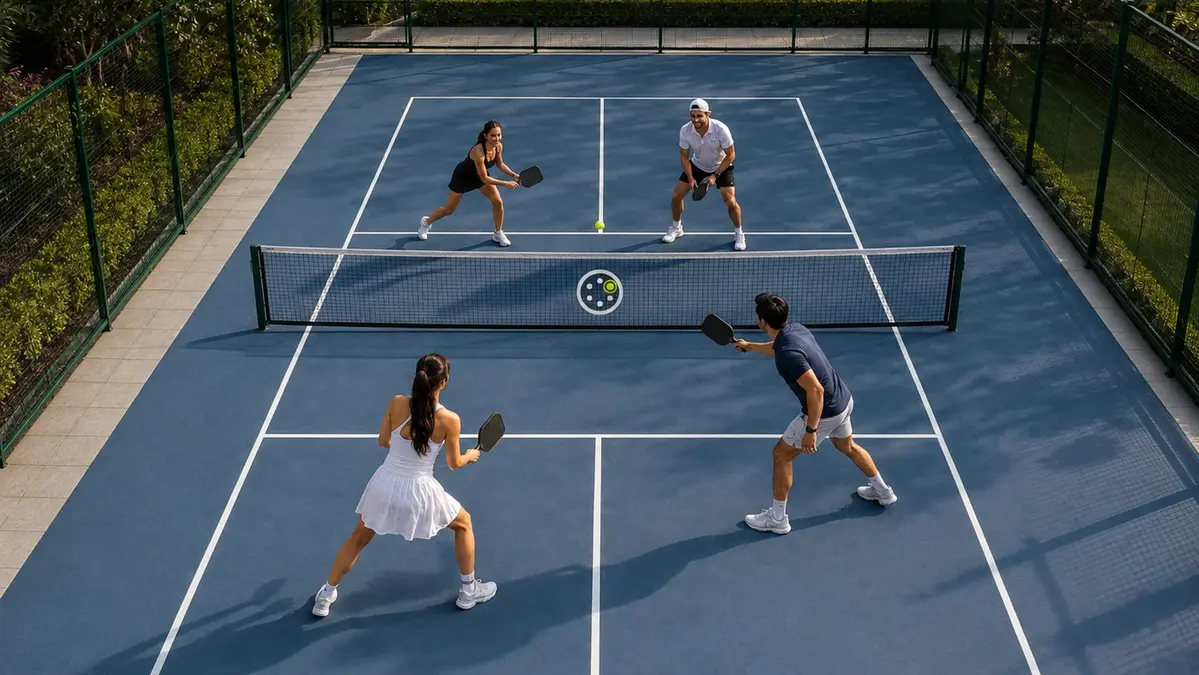
Pickleball can be played as singles or doubles. Doubles is especially popular because it is social, uses less court coverage per player and rewards teamwork. A rally begins with a diagonal serve. After the required opening bounces, players may hit the ball after a bounce or volley it before it lands, subject to the non-volley-zone rule.
The court is smaller than a tennis court, so rallies can become fast near the net. Power helps, but control matters just as much. A well-placed soft shot can be more effective than a hard swing. This is why people from different sporting backgrounds can enjoy a competitive game together once the group is balanced by experience.
The court and the kitchen
A regulation pickleball court is 20 feet wide and 44 feet long. The same dimensions are used for singles and doubles. On each side of the net, the seven-foot area nearest the net is called the non-volley zone, commonly known as the kitchen.
You may enter the kitchen to play a ball that has bounced. What you cannot do is volley the ball while touching the kitchen or its boundary line. Momentum also matters: if you volley outside the kitchen and your movement then carries you into it, that is a fault. The kitchen prevents players from standing directly over the net and smashing every ball, which creates the soft, strategic exchanges for which pickleball is known.
What equipment do you need?
A paddle
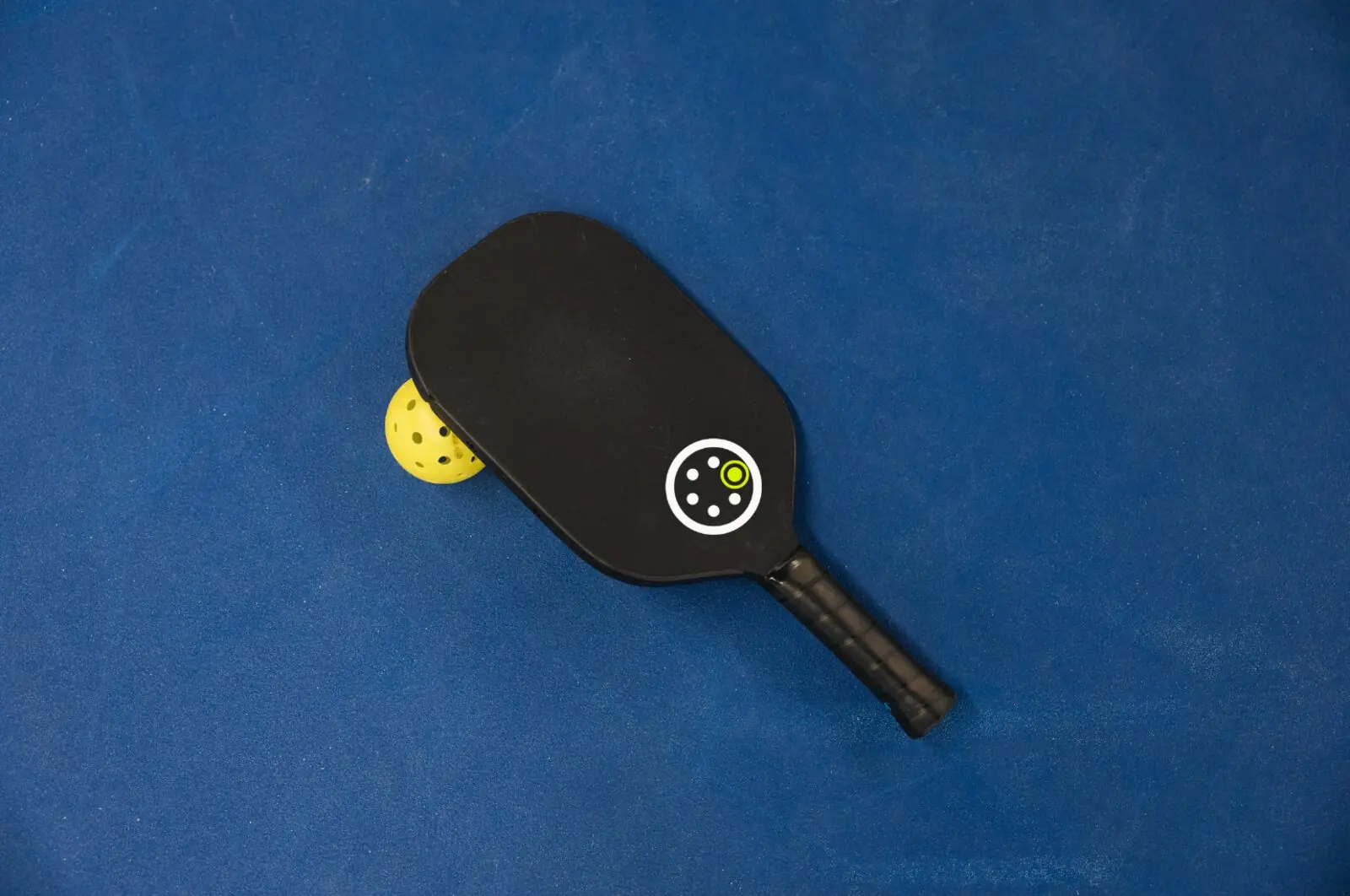
Pickleball paddles are solid rather than strung. For a first session, comfort and control are more important than buying the most expensive model. Try a club or rental paddle if one is available. A grip that feels secure and a manageable weight will help you learn without overworking your wrist or shoulder.
A pickleball
The lightweight plastic ball has holes. Indoor and outdoor balls are not identical: outdoor balls are generally designed to handle wind and harder surfaces, while indoor balls are intended for a more controlled environment. Use the ball provided by the venue when you are unsure.
Court shoes and comfortable clothing
Pickleball involves lateral movement, short sprints, stops and changes of direction. Court shoes are a better choice than running shoes, which are mainly designed for forward movement. Wear clothing that lets you move freely, carry water and warm up before playing. If you are returning to exercise or managing an injury, increase playing time gradually and seek professional medical advice where appropriate.
Five rules every beginner should know
1. Serve diagonally
The serve starts the rally and travels into the diagonally opposite service court. Standard play uses an underhand or approved drop serve. Keep the motion controlled; the aim of a beginner serve is reliability, not speed.
2. Follow the two-bounce rule
The receiving team must let the serve bounce before returning it. The serving team must then let that return bounce before hitting the next shot. After those two required bounces, one on each side, either team may volley or play the ball after a bounce.
3. Respect the non-volley zone
Do not volley while standing in the kitchen or touching its line. You may step into the area to play a ball that has bounced, but regain a stable position outside before attempting the next volley.
4. Know the common faults
A rally is lost when the ball lands outside the lines, fails to clear the net, bounces twice before being returned, or a player violates a service or kitchen rule. A ball touching a boundary line is generally in, although the kitchen line is part of the kitchen for a serve and a serve landing on it is a fault.
5. Call the score before serving
Traditional side-out scoring awards points only to the serving side. Games are commonly played to 11 and must be won by two. Doubles uses three numbers: the serving team's score, the receiving team's score and the server number. The opening call is usually “0-0-2”, reflecting the first-service-turn exception.
You do not need to memorise every situation before your first game. Ask a more experienced player to keep score for the opening rallies. For formal play, use the current official rulebook and rules summary, because governing rules can be revised.
Your first game: a simple checklist
- Confirm whether the venue is indoor or outdoor and whether equipment is available.
- Arrive early enough to change, warm up and understand the court rules.
- Tell the host or other players that you are new.
- Practise a few serves and returns before counting points.
- Focus on keeping the ball in play instead of trying to hit winners.
- Call the score clearly and ask when you are unsure.
- Carry water and stop if you feel pain, dizziness or unusual discomfort.
How to find your first pickleball game in India
Start with location and timing. Browse the court directory and club listings to see what is available near you. A club may offer paddle rental, beginner introductions or coaching, but confirm these details directly rather than assuming every venue has the same facilities.
If you do not already have three other players, look for Open Play. These sessions are designed to bring individual players together at a defined time and venue. Read the session level and eligibility carefully so that the games are enjoyable for everyone.
Players who want a structured foundation can explore verified coach profiles and club-led group classes. Coaching can make scoring, positioning, grip and kitchen movement easier to understand before incorrect habits become automatic.
Good etiquette makes better games
Be honest about your experience, arrive when you say you will and inform the host early if your plan changes. Make line calls clearly and give opponents the benefit of doubt when you are uncertain. Avoid giving constant technical advice unless another player asks for it.
In mixed-level games, stronger players can keep rallies constructive rather than targeting a beginner on every shot. Beginners, in turn, should listen to safety instructions and avoid entering sessions advertised for an advanced level. Competitive play and a welcoming atmosphere can exist together.
What should you learn next?
Once you can serve consistently and follow the scoring, work on a compact return, ready position, court movement and controlled shots near the kitchen. Regular match experience will show you what needs attention. A short focused practice several times a week is usually more useful than occasionally hitting without a plan.
When you feel ready for a more competitive target, browse published tournaments and study each event's format, level, registration deadline and venue information. You can also continue learning through the PickleHunter Journal.
Start with control, learn the score, respect the kitchen and keep the first game friendly.
Pickleball is easy to begin because the first objective is simple: serve the ball in, let the required bounces happen and keep the rally alive. The rest arrives through practice, good partners and time on court. Your first game does not need to be perfect. It only needs to get you started.